| L'Oraison (original) | L'Oraison (translation) |
|---|---|
| S’il ne reste plus rien | If there's nothing left |
| Que les pas d’une cendre | Than the footsteps of an ash |
| C’est d’en rire et te vendre | It's to laugh it off and sell yourself |
| À qui se souvient | Who remembers |
| Des mals et des mots retenus | Evils and withheld words |
| On finit doucement | We end slowly |
| Car les jours nous commandent | Because the days command us |
| Des plaisirs dans ta main | Pleasures in your hand |
| À qui veut le prendre | Who wants to take it |
| C’est toujours à s'éprendre | It's always to fall in love |
| Quand c’est tu reviens | When is it you come back |
| Des fois quand les fleurs sont jolies | Sometimes when the flowers are pretty |
| On finit doucement | We end slowly |
| Car les jours nous commandent | Because the days command us |
| Et les désirs à plus rien | And desires to nothing |
| Quoi t’as l’air quand tu dis | What do you look like when you say |
| Le coin de ton corps interdit | The corner of your body forbids |
| Quoi t’as peur dans les mains | What are you afraid of in your hands |
| Lâche un peu le bout du toit | Let go of the end of the roof a little |
| Avant j’avais les clefs | Before I had the keys |
| Je savais où je vivais | I knew where I lived |
| Maint’nant je plus rien | Now I nothing |
| Ça s’vit comme ça vient | It lives as it comes |
| Des mals ou des mots retenus | Wrongs or withheld words |
| On finit doucement | We end slowly |
| Car les jours nous commandent | Because the days command us |
| Et puis toi tu vas | And then you go |
| Comme va va ça te va | how are you how are you |
| Allez va | Go ahead |
Translation of the song lyrics L'Oraison - Têtes Raides
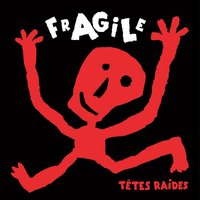
Song information On this page you can read the lyrics of the song L'Oraison , by -Têtes Raides
Song from the album: Fragile
In the genre:Иностранный рок
Release date:06.11.1995
Song language:French
Record label:BMG Rights Management (France)
Select which language to translate into:
Write what you think about the lyrics!
Other songs by the artist:
| Name | Year |
|---|---|
| 1996 | |
| 1993 | |
| 1996 | |
| 2000 | |
| 2020 | |
| 2020 | |
| 2011 | |
| 2011 | |
| 2000 | |
| 2000 | |
| 2011 | |
| 2000 | |
| 2011 | |
| 2000 | |
| 2000 | |
| 2011 | |
| 2011 | |
| 2000 | |
| 2011 | |
| 2000 |