| La Ruiseñora (Coplerías) (original) | La Ruiseñora (Coplerías) (translation) |
|---|---|
| En la taberna del Tres de Espadas | At the Three of Swords Tavern |
| Entre guitarras y anís de mora | Between guitars and blackberry anise |
| Cómo cantaba de madrugada | How she sang at dawn |
| Por soleares La Ruiseñora | For soleares La Ruiseñora |
| Se acabó lo que se daba | What was given is over |
| Le dijo Paco Olivares | Paco Olivares told him |
| Y la llevó hasta el altar; | And he led her up to the altar; |
| Y ella que lo camelaba | And she who teased him |
| Se puso blanca de azahares | She turned white with orange blossoms |
| Y nunca volvió a cantar | And she never sang again |
| Pero Paco, antes del año | But Paco, before the year |
| Empezó a volver de día | She began to return by day |
| Y a beber sin ton ni son; | And to drink without rhyme or reason; |
| Y mordiendo el desengaño | And biting the disappointment |
| La flamenca repetía | The flamenco woman repeated |
| En los hierros del balcón | In the iron bars of the balcony |
| ¿qué te pasa Ruiseñora? | What's wrong Nightingale? |
| Que tengo un nío de pena | I have a child of sorrow |
| Y celos en la garganta | And jealousy in the throat |
| Que hasta el corazón me llora | That even my heart cries |
| Por seguiriyas, por soleares | For seguiriyas, for soleares |
| Y por tarantas | And for tarantas |
| ¿Qué sombra lo tiene esclavo? | What shadow has him slave? |
| ¿De qué rumbo maldecío | Which direction did he curse |
| Viene este dolor de clavo | This nail pain is coming |
| Que me desbarata el sentío? | What breaks my feeling? |
| ¿Dónde está el agonizante | Where is the dying |
| Que entre la noche y la aurora | That between the night and the dawn |
| Se mueve cantando un cante | He moves singing a cante |
| Mejor que La Ruiseñora? | Better than The Nightingale? |
| Al Tres de Espadas corrió celosa | To the Three of Swords she ran she jealous |
| Con la carita despavoría | With her little face she terrifies |
| Y vio a su Paco que con la Rosa | And she saw her Paco of her that with the Rosa |
| En una mesa se divertía | At a table she had fun |
| Subió derecha al tablao | She went straight up to the tablao |
| Aquí está La Ruiseñora | Here is The Nightingale |
| Para lo que gusten mandar; | For what they like to send; |
| ¡lo de ese y yo se ha acabao | that thing and me is over |
| Vuelvo a ser la cantaora | I am the singer again |
| Con que vamos a cantar! | What are we going to sing with? |
| Pues se va a cumplir tu suerte | Well, your luck will come true |
| Y al relámpago de un tiro | And in the lightning of a shot |
| El café se iluminó | The cafe lit up |
| Ella vio llegar la muerte | She saw death come |
| Y en el último suspiro | And in the last breath |
| De este modo le cantó… | She in this way she sang to him... |
| Dios te ampare, Ruiseñora | God help you, Nightingale |
| Campanas doblen | bells toll |
| Por el silencio de tu garganta; | For the silence of your throat; |
| Y recen por su cantaora | And pray for your singer |
| Las seguiriyas, las soleares | The siguiriyas, the soleares |
| Y las tarantas | and the tarantas |
| De un soplo me has apagao | With a breath you turned me off |
| La lámpara de la vida | the lamp of life |
| Mira qué bien has pagao | Look how well you paid |
| Lo que yo a ti te quería | What I loved you |
| ¿Dónde está el agonizante | Where is the dying |
| Que entre la noche y la aurora | That between the night and the dawn |
| Se muere cantando un cante | She dies singing a cante |
| Mejor que La Ruiseñora? | Better than The Nightingale? |
Translation of the song lyrics La Ruiseñora (Coplerías) - Miguel Poveda
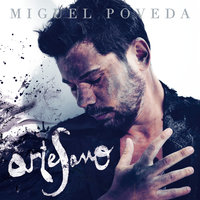
Song information On this page you can read the lyrics of the song La Ruiseñora (Coplerías) , by -Miguel Poveda
Song from the album: ArteSano
In the genre:Латиноамериканская музыка
Release date:31.12.2011
Song language:Spanish
Record label:Universal Music Spain
Select which language to translate into:
Write what you think about the lyrics!
Other songs by the artist:
| Name | Year |
|---|---|
| 2011 | |
| 2014 | |
| 2014 | |
| 2011 | |
Alfileres De Colores ft. Diego Carrasco | 2017 |
Espera Un Momento ft. Miguel Poveda, Josemi Carmona | 2011 |
| 2015 | |
Y Yo Qué Culpa Tengo ft. Moraíto Chico | 2010 |
| 2016 | |
| 2011 | |
| 2008 | |
| 2009 | |
| 2014 | |
Prefiero Amar (Bulería) ft. Daniel Casares | 2015 |
| 2014 | |
| 2018 | |
| 2009 | |
| 2014 | |
| 2014 | |
| 2014 |