| Història cuerta d'un vent (original) | Història cuerta d'un vent (translation) |
|---|---|
| Temps fa que era temps | It's been a long time |
| Que de lluny un vent | What a wind from afar |
| De la serra o del pla | From the mountains or the plain |
| Tramuntana o ponent | Tramuntana or west |
| Ens assegué a la taula | He sat us down at the table |
| Qui sap que menjarà | Who knows what he will eat |
| I si dret o esquerrà | And whether right or left |
| Si dur-li el brou | If you bring the broth |
| En tassa o en un plat | In a cup or on a plate |
| Com complaure al convidat? | How to please the guest? |
| Lli ho preguntí a qui ho sap | I asked him who knows |
| Allò que va ser | That was it |
| Va durar no-res | It lasted for nothing |
| Fou com un corrent | It was like a current |
| Al finestral batent | In the knocking window |
| Que mossa no en fera | What a girl I don't know |
| Anant amunt i avall | Going up and down |
| Estant atrafegada | Being busy |
| Torne i trobe cella sense pres | Go back and find eyebrow without a prisoner |
| Pel forat de la xemeneia | Through the chimney hole |
| La sutja a llom de l’airet | The dirt on the back of the air |
| El sucre i la sal | Sugar and salt |
| No s’han de mesclar | They should not be mixed |
| L’oli sura en l’aigua | The oil floats in the water |
| M’obliga la pena | I'm sorry |
| El sucre i la sal no són de mesclar | Sugar and salt are not to be mixed |
| Gra salat que endolça | Salty grain that sweetens |
| Em dona més pena | I'm more sorry |
Translation of the song lyrics Història cuerta d'un vent - L'Ham de Foc, L`Ham De Foc
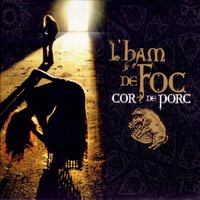
Song information On this page you can read the lyrics of the song Història cuerta d'un vent , by -L'Ham de Foc
Song from the album: Cor De Porc
In the genre:Музыка мира
Release date:24.04.2005
Song language:Catalan
Record label:Galileo Music Communication
Select which language to translate into:
Write what you think about the lyrics!
Other songs by the artist:
| Name | Year |
|---|---|
| 2005 | |
| 2006 | |
| 2005 | |
| 2006 | |
Cus! ft. L'Ham de Foc | 2005 |
| 2006 | |
| 2005 | |
| 2006 | |
| 2005 | |
| 2005 | |
| 2005 | |
| 2005 | |
| 2005 | |
| 2005 | |
Cus! ft. L'Ham de Foc | 2005 |
| 2005 | |
| 2005 | |
| 2005 | |
| 2006 | |
| 2006 |