| Teorías, filosofías, explicaciones, justificaciones, racistas, tópicos y el arroz (original) | Teorías, filosofías, explicaciones, justificaciones, racistas, tópicos y el arroz (translation) |
|---|---|
| Pregón, charla, explicación, teoría, filosofía… Es lo mismo | Proclamation, talk, explanation, theory, philosophy... It's the same |
| Aunque bueno, al final rapear esto sería | Although hey, in the end rapping this would be |
| Pero no va a ser de Rap sobre lo que vamos ahora a hablar | But it is not going to be Rap about what we are going to talk about now |
| Sino de algo que con las rimas, de ello os tendréis que percatar | But of something that with the rhymes, you will have to realize that |
| Mira, por ejemplo: Un palito, dos palitos, tres palitos | Look, for example: One stick, two sticks, three sticks |
| Un segundo, un minuto, una hora; | A second, a minute, an hour; |
| un reloj | a clock |
| ¿Y qué quiero decir con esto? | And what do I mean by this? |
| Que cuando relacionas unas cosas | That when you relate some things |
| Al final a todo ese conjunto se le llama conjunción | In the end, this whole set is called a conjunction. |
| Aunque si nos ponemos a estudiar esta cuestionable teoría | Although if we start to study this questionable theory |
| Lo más lógico sería darse cuenta de que no | The most logical thing would be to realize that |
| Y percatarse de que al final de tanta absurda habladuría | And realize that at the end of so much absurd talk |
| Lo más lógico sería crearos meros de confusión | The most logical thing would be to create confusion groups |
| ¿Y por qué? | And because? |
| Buena pregunta, pues muy fácil: | Good question, very easy: |
| No todo el mundo entiende a la primera cualquier tipo de concepto | Not everyone understands any type of concept at first |
| El intelecto mental de cada persona varía mucho de una otra | The mental intellect of each person varies greatly from one another |
| Y como todos saben, aquí no hay nadie perfecto | And as everyone knows, there is no one perfect here. |
| En base a eso, cualquier filosofía o teoría puede ser cuestionada | Based on that, any philosophy or theory can be questioned. |
| Ya que podría estar equivocada | Since I could be wrong |
| La persona que en ese momento se planteó X cuestión | The person who at that time asked himself X question |
| Al formular una teoría en un momento de inspiración | By formulating a theory in a moment of inspiration |
| ¿Quién ha hablado? | Who has spoken? |
| Tú lo sabes | You know it |
| ¿Quién lo sabe? | Who knows? |
| Frank T El Estratega | Frank T The Strategist |
| Así que no digas que no sé lo que digo | So don't say I don't know what I'm saying |
| Yo le digo a los que han dicho que no saben lo que dicen | I tell those who have said that they do not know what they are saying |
| Porque cuando ellos hablan mucho más se contradicen | Because when they talk much more they contradict themselves |
| Si cometes una infracción que en teoría es justificable | If you commit an infraction that in theory is justifiable |
| Han de ser sólidos tus argumentos para no ser el culpable | Your arguments must be solid so as not to be the culprit |
| Aunque, me he explicado mal, el culpable siempre serás | Although, I have explained myself badly, the culprit will always be |
| Lo que ocurre es que en ese momento era justo infraccionar | What happens is that at that time it was fair to infringe |
| Un Casco Azul, por ejemplo, va a un país en guerra a pacificar | A Blue Helmet, for example, goes to a country at war to pacify |
| Y cuando ve el culo de la indígena sólo piensa en infraccionar | And when he sees the indigenous woman's ass, he only thinks about breaking |
| Infracciona violando, abusando, pegando | She violates raping, abusing, beating |
| Pero ser un Casco Azul tal acto está justificando | But being a Blue Helmet is justifying such an act. |
| Total, se trataba de una sucia adolescente maloliente africana que no vale na' | Total, it was a dirty smelly African teenager who is worthless |
| de nada | you are welcome |
| Ante el poder pacificador de un Casco Azul perteneciente a la gran y poderosa | Faced with the pacifying power of a Blue Helmet belonging to the great and powerful |
| Armada Norteamericana | american army |
| Otro ejemplo, un javato empieza a probar la heroína | Another example, a javato starts trying heroin |
| Una vez, dos veces, tres veces… Bueno, al final acaba yonqui | Once, twice, three times... Well, in the end he ends up a junkie |
| Se le acaban sus ahorros, le quita la pasta a sus viejos | His savings run out, he takes money from his old people |
| A la gente, en definitiva, para poder quitarse el mono | To the people, in short, to be able to take off their overalls |
| Recibió una monumentalísima paliza al intentar atracar a quien no debía de | He received a monumental beating when trying to rob someone he shouldn't have |
| atracar | Rob |
| Justificando que era yonqui le tenía que robar porque nadie le daba trabajo | Justifying that he was a junkie he had to rob him because nobody gave him work |
| para poderse picar | to be able to bite |
| ¿Quién ha hablado? | Who has spoken? |
| Tú lo sabes | You know it |
| ¿Quién lo sabe? | Who knows? |
| Frank T El Estratega | Frank T The Strategist |
| Así que no digas que no sé lo que digo | So don't say I don't know what I'm saying |
| Yo le digo a los que han dicho que no saben lo que dicen | I tell those who have said that they do not know what they are saying |
| Porque cuando ellos hablan mucho más se contradicen | Because when they talk much more they contradict themselves |
| Europeo medio típico afirma no ser racista | Typical average European claims not to be racist |
| Ya que se lleva muy bien con el único negro de su curro | Since he gets along very well with the only black man in his job |
| Pero en su empresa al contratar a moro y a un gitano | But in his company he hired a Moor and a gypsy |
| Su hostilidad parece tal que ya rebuzna como un burro | His hostility from him seems such that he already brays like a donkey |
| Y aparece la otra cara, la que esconden los cínicos | And the other face appears, the one that the cynics hide |
| La cara de los que se guían por los tópicos típicos | The face of those who are guided by typical clichés |
| Que dicen: «Bueno, yo no soy racista ni con los negros ni con los chinos | Who say: "Well, I am not racist neither with the blacks nor with the Chinese |
| Pero a los moros y a los gitanos, no los quiero ni de vecinos.» | But I don't even want the Moors and the gypsies as neighbors." |
| Borreguería y estupidez, desde mi punto de vista | Sheep and stupidity, from my point of view |
| Y además, ¿Qué quieres que te diga?, un racista es un racista | And besides, what do you want me to tell you? A racist is a racist |
| El que no es racista contigo, pero, con otro sí lo es | The one who is not racist with you, but with another he is |
| Verás que será racista contigo cuando tengas un problema con él | You will see that he will be racist with you when you have a problem with him |
| Estos tontos, bodoques e imbéciles | These fools, bodoques and imbeciles |
| Son los que llaman bueno a Jesús Gil ya que da puestos de trabajo | They are the ones who call Jesús Gil good since he gives jobs |
| Y dicen que ser fascista no es malo | And they say that being a fascist is not bad |
| Puedes ser un facha y a la vez ser un tipo muy majo | You can be a facha and at the same time be a very nice guy |
| Son los mismos que creen que Jesucristo era blanco | They are the same ones who believe that Jesus Christ was white |
| Que todo iría mejor si estuviese vivo Franco | That everything would be better if Franco were alive |
| Que falsamente rezan los domingos en la misa | That they falsely pray on Sundays at mass |
| Cuando luego a tus espaldas te la juegan y te pisan | When then behind your back they play it and step on you |
| Son los que ven a cuatro negros y dicen: «Esto es una plaga» | They are the ones who see four blacks and say: "This is a plague" |
| Que van de nazis al fútbol y de fútbol no saben nada | They go from Nazis to football and they don't know anything about football |
| Que les den a todos esos «nacional bacalas» | Fuck all those "national bacalas" |
| Que no tienen lo que tú sabes: de uno a uno a dar la cara | That they do not have what you know: one by one to show their faces |
| ¿Quién ha hablado? | Who has spoken? |
| Tú lo sabes | You know it |
| ¿Quién lo sabe? | Who knows? |
| Frank T El Estratega | Frank T The Strategist |
| Así que no digas que no sé lo que digo | So don't say I don't know what I'm saying |
| Yo le digo a los que han dicho que no saben lo que dicen | I tell those who have said that they do not know what they are saying |
| Porque cuando ellos hablan mucho más se contradicen | Because when they talk much more they contradict themselves |
| No sé si habéis sacado de todo esto algo en claro | I don't know if you have gotten something clear from all this |
Translation of the song lyrics Teorías, filosofías, explicaciones, justificaciones, racistas, tópicos y el arroz - Frank T
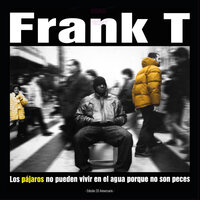
Song information On this page you can read the lyrics of the song Teorías, filosofías, explicaciones, justificaciones, racistas, tópicos y el arroz , by -Frank T
In the genre:Рэп и хип-хоп
Release date:11.04.1998
Song language:Spanish
Select which language to translate into:
Write what you think about the lyrics!
Other songs by the artist:
| Name | Year |
|---|---|
| 1998 | |
| 1998 | |
| 2015 | |
| 1998 | |
| 2001 | |
| 2010 | |
| 2001 | |
| 2001 | |
| 2010 | |
| 1998 | |
| 1998 | |
| 1998 | |
| 1999 | |
Nsombolay (con Kultuma, SR. T-Cee, Shogun) ft. Shogun, Sr. T-Cee | 1999 |
| 1999 | |
Deprisa (con Azu) ft. azu | 1999 |
El amor (con Kultama) ft. Kultama | 1999 |
| 2021 | |
| 1999 | |
No hay (con Kultama) ft. Kultama | 1999 |