| L'homme du pont (original) | L'homme du pont (translation) |
|---|---|
| Il portait une écharpe bleue, été comme hiver, parfois enroulée autour de son | He wore a blue scarf, summer and winter, sometimes wrapped around his |
| cou, parfois flottant au vent, on se voyait de loin. | neck, sometimes fluttering in the wind, we could see each other from afar. |
| Je courrais, | I was running, |
| nous courrions, nous avions le même âge, mais il avait l’air plus vieux. | we were running, we were the same age, but he looked older. |
| Nous étions amoureux. | We were in love. |
| J'étais un peu gauche, il se tenait bien droit, très silencieux. | I was a little clumsy, he stood straight, very quiet. |
| Quand il parlait, c'était avec un accent. | When he spoke, it was with an accent. |
| Je ne savais pas où il habitait, | I didn't know where he lived, |
| nous nous donnions toujours rendez-vous sur le plus vieux pont de Paris que | we always meet on the oldest bridge in Paris that |
| l’on nomme Pont Neuf. | it is called Pont Neuf. |
| «Les français «, disait-il, mais il ne terminait pas sa | "The French," he would say, but he wouldn't finish his |
| phrase. | phrasing. |
| Si je voulais lui écrire, je n’avais qu'à lui glisser un mot dans les | If I wanted to write to him, all I had to do was drop him a line. |
| buissons du Vert-Galant. | bushes of Vert-Galant. |
| C'était notre domaine, ce pont, notre nid, notre raison de vivre. | It was our domain, this bridge, our nest, our reason for living. |
| Une salle de bal de 238 mètres de long et 20 mètres de large — sacrée surface, | A ballroom 238 meters long and 20 meters wide — sacred surface, |
| quand on y pense. | when you think about it. |
| Longtemps je n’ai pas connu son nom. | For a long time I did not know his name. |
| Je l’appelais l’homme du Pont Neuf, | I called him the man from the Pont Neuf, |
| l’homme du Pont New — les semaines passant, il devint l’homme du Pont Nine, | the man from Pont New — as the weeks passed he became the man from Pont Nine, |
| puis l’homme du Pont, tout court, celui qui dépassait tous les autres en | then the man from the Bridge, period, the one who surpassed all the others in |
| mystère. | mystery. |
| Mes amies se moquaient de moi, et moi je m’en moquais, qu’elles se | My friends made fun of me, and I didn't care that they |
| moquent: nous, au moins, c'était du sérieux. | mock: we, at least, it was serious. |
| Un samedi, il ne vint pas. | One Saturday he did not come. |
| J’attendis plus d’une heure côté Quai des Orfèvres, | I waited more than an hour on the Quai des Orfèvres side, |
| j’allais repartir quand une jeune femme qui lui ressemblait s’approcha | I was about to leave when a young woman who looked like her approached |
| timidement de moi. | shyly from me. |
| Sous mes pieds, les pavés sont devenus tout mous. | Under my feet, the cobblestones have become very soft. |
| Peter avait eu un accident. | Peter had had an accident. |
| Peter, l’homme du Pont s’appelait Peter. | Peter, the man from the Bridge was called Peter. |
| C'était grave, oui, il était dans le coma. | It was serious, yes, he was in a coma. |
| J’aurais pu demander à le voir, | I could have asked to see him, |
| je ne l’ai pas fait. | I did not do it. |
| Je n’ai pas réussi à articuler un mot. | I couldn't articulate a word. |
| Le temps d’un bateau-mouche, et c’est trente ans qui passent. | Time for a Bateau-Mouche, and thirty years pass. |
| Auiourd’hui, | Today, |
| il pleut, de ces pluies glacées de l’hiver, sans éclat, sans charme, sans rien. | it's raining, those icy winter rains, dull, devoid of charm, devoid of anything. |
| Je vis loin des lumières dans un endroit où il n’y a pas de fleuve. | I live far from the lights in a place where there is no river. |
| Ma chambre donne côté jardin. | My room overlooks the garden. |
| Comment ai-je pu laisser repartir cette jeune | How could I let this young girl go |
| femme sans un mot de réconfort, sans lui demander son adresse, ou l’adresse de | wife without a word of comfort, without asking her address, or the address of |
| l’hôpital? | the hospital? |
| Elle aussi avait un petit accent. | She also had a little accent. |
| L’homme du Pont est-il encore | Is the man from the bridge still |
| Vivant? | Alive? |
| Je dors chaque jour un peu plus mal. | I sleep a little worse every day. |
| Je me réveille en lui parlant. | I wake up talking to him. |
| J’ai rêvé l’autre nuit que le pont s'écroulait dans un tremblement de terre. | I dreamed the other night that the bridge collapsed in an earthquake. |
| Et puis l’instant d’après, c'était la ville entière qui tombait en poussière, | And then the next moment, the whole town crumbled to dust, |
| et le pont qui tenait debout, tout seul, préservé par la force magique de | and the bridge that stood on its own, preserved by the magical force of |
| notre lien. | our link. |
| L’instant d’après, encore, le pont se mettait à fondre, | The next moment, again, the bridge began to melt, |
| il s’agenouillait dans l’eau comme un cheval blessé, pliait l'échine, | he knelt in the water like a wounded horse, bent his back, |
| puis se disloquait en silence. | then fell apart in silence. |
| Ça m’agace, cette image, comme une pomme acide agace les dents. | It annoys me, this image, like a sour apple annoys the teeth. |
| Si au moins il | If at least he |
| y avait eu du bruit… Le corps se raidit, il ne veut pas que ça se termine. | there had been a noise... The body stiffened, he didn't want this to end. |
| Peter, il s’appelait Peter, Pierre en français, l’homme du Pont. | Peter, his name was Peter, Pierre in French, the man from the Bridge. |
Translation of the song lyrics L'homme du pont - Juliette Gréco
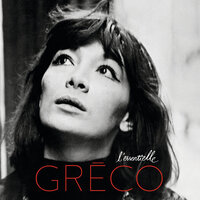
Song information On this page you can read the lyrics of the song L'homme du pont , by -Juliette Gréco
Song from the album: L'essentielle
In the genre:Эстрада
Release date:25.06.2020
Song language:French
Record label:Decca Records France
Select which language to translate into:
Write what you think about the lyrics!
Other songs by the artist:
| Name | Year |
|---|---|
| 2016 | |
| 2016 | |
| 2012 | |
| 2020 | |
| 2011 | |
| 2020 | |
| 2011 | |
| 2019 | |
| 2010 | |
| 2017 | |
| 2011 | |
| 2011 | |
| 2010 | |
| 2017 | |
| 2016 | |
| 2011 | |
| 2011 | |
| 2011 | |
| 2011 | |
| 2011 |