| Le Grand Chêne (original) | Le Grand Chêne (translation) |
|---|---|
| Il vivait en dehors des chemins forestiers | He lived off the forest roads |
| Ce n'était nullement un arbre de métier | It was by no means a profession tree |
| Il n’avait jamais vu l’ombre d’un bûcheron | He had never seen the shadow of a lumberjack |
| Ce grand chêne fier sur son tronc | This big proud oak tree on its trunk |
| Il eût connu des jours filés d’or et de soie | He would have known days spun of gold and silk |
| Sans ses proches voisins, les pires gens qui soient; | Without its close neighbours, the worst people there are; |
| Des roseaux mal pensant, pas même des bambous | Evil thinking reeds, not even bamboos |
| S’amusant à le mettre à bout | Having fun putting it down |
| Du matin jusqu’au soir ces petit rejetons | From morning until night these little offspring |
| Tout juste cann' à pêch', à peine mirlitons | Barely cann' to fish', barely mirlitons |
| Lui tournant tout autour chantaient, in extenso | Turning him around were singing, verbatim |
| L’histoire du chêne et du roseau | The story of the oak and the reed |
| Et, bien qu’il fût en bois, les chênes, c’est courant | And, although it was made of wood, the oaks, it is common |
| La fable ne le laissait pas indifférent | The fable did not leave him indifferent |
| Il advint que lassé d'être en but aux lazzi | It happened that tired of being in goal at the lazzi |
| Il se résolu à l’exil | He decided to exile |
| A grand-peine il sortit ses grands pieds de son trou | With great difficulty he took his big feet out of his hole |
| Et partit sans se retourner ni peu ni prou | And left without looking back, little or nothing |
| Mais, moi qui l’ai connu, je sais qu’il en souffrit | But, I who knew him, I know that he suffered from it |
| De quitter l’ingrate patrie | To leave the ungrateful homeland |
| A l’orée des forêts, le chêne ténébreux | At the edge of the forest, the dark oak |
| A lié connaissance avec deux amoureux | Befriended two lovers |
| "Grand chêne laisse-nous sur toi graver nos noms…" | "Great oak let us engrave our names on you..." |
| Le grand chêne n’as pas dit non | The big oak tree didn't say no |
| Quand ils eur’nt épuisé leur grand sac de baisers | When they had exhausted their big bag of kisses |
| Quand, de tant s’embrasser, leurs becs furent usés | When, from kissing so much, their beaks were worn out |
| Ils ouïrent alors, en retenant des pleurs | Then they heard, holding back tears |
| Le chêne contant ses malheurs | The oak recounting its misfortunes |
| "Grand chên', viens chez nous, tu trouveras la paix | "Big oak tree, come to us, you will find peace |
| Nos roseaux savent vivre et n’ont aucun toupet | Our reeds know how to live and have no quills |
| Tu feras dans nos murs un aimable séjour | You will make a pleasant stay within our walls |
| Arrosé quatre fois par jour." | Watered four times a day." |
| Cela dit, tous les trois se mettent en chemin | That said, all three get on their way |
| Chaque amoureux tenant une racine en main | Each lover holding a root in hand |
| Comme il semblait content! | How happy he seemed! |
| Comme il semblait heureux! | How happy he seemed! |
| Le chêne entre ses amoureux | The oak tree between its lovers |
| Au pied de leur chaumière, ils le firent planter | At the foot of their cottage, they planted it |
| Ce fut alors qu’il commença de déchanter | It was then that he began to become disillusioned |
| Car, en fait d’arrosage, il n’eut rien que la pluie | Because, in terms of watering, there was nothing but the rain |
| Des chiens levant la patt' sur lui | Dogs raising their paws on him |
| On a pris tous ses glands pour nourrir les cochons | We took all his acorns to feed the pigs |
| Avec sa belle écorce on a fait des bouchons | With its beautiful bark we made corks |
| Chaque fois qu’un arrêt de mort était rendu | Every time a death warrant was given |
| C’est lui qui héritait du pendu | It was he who inherited the hanged man |
| Puis ces mauvaises gens, vandales accomplis | Then these bad people, accomplished vandals |
| Le coupèrent en quatre et s’en firent un lit | Cut it in four and made a bed of it |
| Et l’horrible mégère ayant des tas d’amants | And the horrible shrew with lots of lovers |
| Il vieillit prématurément | He is aging prematurely |
| Un triste jour, enfin, ce couple sans aveu | A sad day, finally, this couple without a confession |
| Le passa par la hache et le mit dans le feu | Passed it through the ax and put it in the fire |
| Comme du bois de caisse, amère destinée! | Like crate wood, bitter destiny! |
| Il périt dans la cheminée | He perishes in the chimney |
| Le curé de chez nous, petit saint besogneux | The priest of our house, a needy little saint |
| Doute que sa fumée s'élève jusqu'à Dieu | Doubt that its smoke rises to God |
| Qu’est-c'qu'il en sait, le bougre, et qui donc lui a dit | What does he know, the bugger, and who told him |
| Qu’y a pas de chêne en paradis? | What is no oak in paradise? |
| Qu’y a pas de chêne en paradis? | What is no oak in paradise? |
Translation of the song lyrics Le Grand Chêne - Georges Brassens
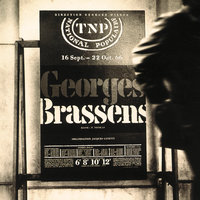
Song information On this page you can read the lyrics of the song Le Grand Chêne , by -Georges Brassens
Song from the album: Au Tnp 1966
In the genre:Поп
Release date:30.12.1999
Song language:French
Record label:Mercury
Select which language to translate into:
Write what you think about the lyrics!
Other songs by the artist:
| Name | Year |
|---|---|
| 2016 | |
| 2016 | |
| 2016 | |
| 1989 | |
| 2015 | |
| 2016 | |
| 2020 | |
| 2016 | |
| 2022 | |
| 1989 | |
| 1989 | |
| 2016 | |
| 2016 | |
| 2021 | |
| 2016 | |
| 1989 | |
| 2016 | |
| 2016 | |
| 2015 | |
| 2014 |