| Clémence en vacances (original) | Clémence en vacances (translation) |
|---|---|
| On l’a dit à la grand-mère | We told the grandma |
| Qui l’a dit à son voisin | Who told his neighbor |
| Le voisin à la bouchère | The Butcher's Neighbor |
| La bouchère à son gamin | The butcher to her kid |
| Son gamin qui tête folle | His crazy-headed kid |
| N’a rien eu de plus urgent | Didn't have anything more urgent |
| Que de le dire à l'école | Than to say it at school |
| À son voisin Pierre-Jean | To his neighbor Pierre-Jean |
| Clémence Clémence | Clemence Clemence |
| A pris des vacances | took a vacation |
| Clémence ne fait plus rien | Clemence doesn't do anything anymore |
| Clémence Clémence | Clemence Clemence |
| Est comme en enfance | Is like in childhood |
| Clémence va bien | Clemence is fine |
| Ça sembla d’abord étrange | At first it seemed strange |
| On s’interrogea un peu | We wondered a bit |
| Sur ce qui parfois dérange | On what sometimes bothers |
| La raison de certains vieux | The reason for some old |
| Si quelque mauvaise chute | If some bad fall |
| Avait pu l’handicaper | Could have handicapped him |
| Ou encore une dispute | Or an argument |
| Avec ce brave Honoré | With this brave Honoré |
| Puis on apprit par son gendre | Then we learned from his son-in-law |
| Qu’il ne s'était rien passé | that nothing had happened |
| Mais simplement qu'à l’entendre | But just to hear it |
| Elle en avait fait assez | She had done enough |
| Bien qu’ayant toutes ses jambes | Although having all his legs |
| Elle reste en son fauteuil | She stays in her chair |
| Un peu de malice flambe | A little mischief blazes |
| Parfois au bord de son œil | Sometimes at the edge of his eye |
| Honoré c’est bien dommage | Honored it's a shame |
| Doit tout faire à la maison | Must do everything at home |
| La cuisine et le ménage | Cooking and housekeeping |
| Le linge et les commissions | Linen and Commissions |
| Quand il essaie de lui dire | When he tries to tell her |
| De coudre un bouton perdu | To sew on a lost button |
| Elle répond dans un sourire | She responds with a smile |
| Va, j’ai bien assez cousu | Come on, I've sewn enough |
| C’est la maîtresse d'école | She's the schoolmistress |
| Qui l’a dit au pharmacien | Who told the pharmacist |
| Clémence est devenue folle | Clemence has gone mad |
| Paraît qu’elle ne fait plus rien | Seems she's not doing anything anymore |
| Mais selon l’apothicaire | But according to the apothecary |
| Dans l’histoire le plus fort | In history the strongest |
| N’est pas qu’elle ne veuille rien faire | Isn't that she doesn't want to do anything |
| Mais n’en ait aucun remords | But have no remorse |
| Je suis de bon voisinage | I'm a good neighbor |
| On me salue couramment | I am commonly greeted |
| Loin de moi l’idée peu sage | Far be it from me the unwise idea |
| D’inquiéter les brave gens | To worry the good people |
| Mais les grand-mères commencent | But the grandmothers begin |
| De rire et parler tout bas | To laugh and talk softly |
| La maladie de Clémence | Clemence's Disease |
| Pourrait bien s'étendre là | Could well lay there |
| Toutes les Clémence | All the Clemences |
| Prendraient des vacances | would take a vacation |
| Elles ne feraient plus rien | They wouldn't do anything |
| Toutes les Clémence | All the Clemences |
| Comme en enfance | Like in childhood |
| Elles seraient bien | They would be good |
| Toutes les Clémence | All the Clemences |
| Prendraient des vacances | would take a vacation |
| Elles ne feraient plus rien | They wouldn't do anything |
| Toutes les Clémence | All the Clemences |
| Comme en enfance | Like in childhood |
| Se reposeraient enfin | would finally rest |
Translation of the song lyrics Clémence en vacances - Anne Sylvestre
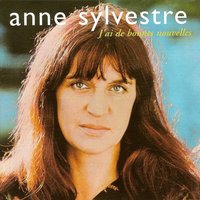
Song information On this page you can read the lyrics of the song Clémence en vacances , by -Anne Sylvestre
In the genre:Эстрада
Release date:31.07.2011
Song language:French
Select which language to translate into:
Write what you think about the lyrics!
Other songs by the artist:
| Name | Year |
|---|---|
| 2019 | |
| 2019 | |
| 2019 | |
| 2019 | |
| 2019 | |
| 2019 | |
La plus belle c'est ma mère ft. Agnes Bihl, Nathalie Miravette | 2015 |
Juste une femme ft. Agnes Bihl, Nathalie Miravette | 2015 |
Non tu n'as pas de nom ft. Agnes Bihl, Nathalie Miravette | 2015 |
Je reviens ft. Agnes Bihl, Nathalie Miravette | 2015 |
| 2016 | |
| 2016 | |
| 2019 | |
| 2016 | |
| 2019 | |
| 2016 | |
| 2019 | |
| 2019 | |
| 2019 | |
| 2005 |