| L'erreur est humaine (original) | L'erreur est humaine (translation) |
|---|---|
| Il était d’où, il était jah, il était djinn | He was from where, he was jah, he was jinn |
| Voici l’histoire de celui qui portait pas de jean | This is the story of the one who wore no jeans |
| Mais des tissus bariolés de l’Afrique | But colorful fabrics from Africa |
| Des sandalettes de plastique… | Plastic sandals... |
| Il vivait là, au milieu des bâtiments | He lived there, among the buildings |
| Et racontait à tue-tête des boniments | And was spouting sales pitches |
| L’histoire d’un pays qui raconte aux enfants | The story of a country that tells children |
| Que c’est nous les méchants! | We are the bad guys! |
| Il disait c’est un pays où t’es libre, en gros | He said it's a country where you're free, basically |
| Enfin selon la couleur de ton chapeau | Finally according to the color of your hat |
| Un pays qui veut nous protéger des malheurs | A country that wants to protect us from misfortunes |
| Mais y veut être le gendarme et c’est nous les voleurs | But he wants to be the cop and we're the thieves |
| L’erreur est humaine, mais l’humain? | To err is human, but human? |
| L’erreur est humaine, mais l’humain? | To err is human, but human? |
| L’erreur est humaine, mais l’humain? | To err is human, but human? |
| L’erreur est humaine | The error is human |
| Y disait j’ai sept ou huit langues dans ma bouche | He said I have seven or eight languages in my mouth |
| Si j’en avais que deux y trouverait ça louche | If I only had two would find it suspicious |
| Mais c’est qu’il nous ferait manger du sable… et | But he would make us eat sand... and |
| Comment dit-on farine animale en anglais? | How do you say animal meal in English? |
| Vous, vous mangez tout comme eux à ce train | You eat just like them on this train |
| On sera plus que des poules qui poicorent…ça craint! | We'll be more than chickens kicking...that sucks! |
| On était quoi avant qu’ils se ramènent? | What were we before they came back? |
| On savait ce qu'était qu’une semaine | We knew what a week was |
| Un week-end, un premier mai ou des vacances | A weekend, a May Day or a holiday |
| Y nous font marcher sur la tête et quand t’y penses | They make us walk on our heads and when you think about it |
| Y z’ont la tête la plus honnête | They have the most honest head |
| Mais méfie-toi c’est le képi de la planète! | But beware it's the kepi of the planet! |
| En vérité, je vous le dit, y sont dedans: | Verily, I say unto you, therein are: |
| Mon peuple à moi a bien plus de mille ans | My people are well over a thousand years old |
| Mon nom a pas pris une ride | My name hasn't aged a bit |
| Il a sa trace gravée dans les pyramides | He has his trace engraved in the pyramids |
| Avant qu’ils se ramènent ou qu’y nous crèvent | Before they come back or we die |
| Avant qu’ils nous pompe l’oxygène et la sève | Before they suck us oxygen and sap |
| Au nom des thunes, au nom du fils | In the name of money, in the name of the son |
| Au nom du Nasdaq, au nom du bénéfice | On behalf of Nasdaq, on behalf of earnings |
| Nous on savait que si la thune a pas d’odeur | We knew if money don't smell |
| Pas la sentir c’est passer un mauvais quart d’heure | Not feeling it is having a bad time |
| Elle disait ca, cette face de paumé | She said that, that clueless face |
| En chantant «Com' falla' me», «Com' falla' me» | Singing "Com' falla' me", "Com' falla' me" |
Translation of the song lyrics L'erreur est humaine - Zebda
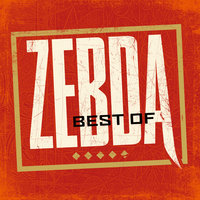
Song information On this page you can read the lyrics of the song L'erreur est humaine , by -Zebda
Song from the album: Best Of
In the genre:Эстрада
Release date:26.04.2016
Song language:French
Record label:Barclay
Select which language to translate into:
Write what you think about the lyrics!
Other songs by the artist:
| Name | Year |
|---|---|
| 2016 | |
| 2011 | |
| 2011 | |
| 2011 | |
| 2016 | |
Caravane ft. Zebda, Amparanoia | 2017 |
| 2003 | |
| 2016 | |
| 2011 | |
| 2016 | |
| 2016 | |
| 2016 | |
| 2016 | |
| 2016 | |
| 2016 | |
| 2016 | |
| 2016 | |
| 2016 | |
| 2016 |