| L'Horizon (original) | L'Horizon (translation) |
|---|---|
| «Nous n’irons pas plus loin», te dit le capitaine | "We won't go any further," the captain tells you |
| Trop d’obstacles aujourd’hui pour gagner l’horizon | Too many obstacles today to reach the horizon |
| Des baleines puises gmissent sur la grve | Exhausted whales moan on the beach |
| Leur sang couvre des bouches comme autant d’hameons | Their blood covers mouths like so many hooks |
| Comme autant de collines occultant l’horizon | Like so many hills obscuring the horizon |
| De crtes insensibles l’adagio des plaines | From insensitive crests the adagio of the plains |
| «Je suis vraiment navr «, te dit le capitaine | "I'm really sorry", the captain tells you |
| Et tu sens qu’il dit vrai et qu’il a le cњur bon. | And you feel that he is telling the truth and that he has a good heart. |
| Ds lors la bouche vermeille d’une femme au harpon | From then on the vermilion mouth of a woman with a harpoon |
| Qui entre dans tes murs et saigne les baleines | Who enters your walls and bleeds the whales |
| Te fait des mois durant ddaigner l’horizon | Makes you scorn the horizon for months |
| Et lorsque tu le croises snober le capitaine. | And when you meet him snub the captain. |
| Quand tu rentres chez toi, tu te dis qu’il fait bon | When you come home, you tell yourself it's good |
| Le mensonge est partout infiltr? | The lie is infiltrated everywhere? |
| dans tes veines | in your veins |
| Tant tu aimes goter au sang de la baleine | So much you like to taste the blood of the whale |
| Qui d? | Who of |
| borde des lvres de la femme au harpon. | lines the lips of the woman with the harpoon. |
| Mais un jour sur ta manche tire le capitaine | But a day on your sleeve pulls the captain |
| Les yeux exorbits, il te dit: «Repartons «. | Eyes bulging, he says to you, "Let's go back". |
| Il est temps de sortir du sommeil des reines | It's time to wake up from the sleep of queens |
| Car nul ne vous attend autant que l’horizon. | Because no one awaits you more than the horizon. |
| C’est Lob Nor qui t’espre, l’Inlandsis qui t’appelle | It's Lob Nor waiting for you, the Inlandsis calling you |
| La Sierra Nevada qui la nuit crie ton nom | The Sierra Nevada that at night screams your name |
| Et c’est la Grande Bleue qui rehausse le ciel | And it's the Big Blue that lifts the sky |
| Chacun d’eux te rclame et t’offre l’horizon | Each one of them claims you and offers you the horizon |
| Mais celui-ci t’chappe, stopp dans son lan | But this one escapes you, stops in its tracks |
| Par des sommets hargneux, des valles encaisses, | Through surly peaks, deep valleys, |
| Des villes au cњur de pierre aux formes insenses | Stone-hearted cities of insane shapes |
| Vois, la barbe te pousse et ton pas se fait lent. | See, the beard pushes you and your step becomes slow. |
| Et tu entends au loin les plaintes des baleines | And you hear the cries of the whales in the distance |
| Qui avant de finir sur la grve ont sans doute | Who before ending up on the strike have no doubt |
| Connu cet horizon don’t seul le capitaine | Known this horizon of which only the captain |
| Espre encore pour deux que tu croises la route. | Hope again for two that you cross the road. |
| Mais un jour au silence qui monte aux alentours | But one day in the silence that rises around |
| Comme tes yeux se dcollent, tu sais qu’on t’a laiss? | As your eyes peel off, do you know we left you? |
| Seul avec ton vieux rve don’t l’ombre est un vautour | Alone with your old dream whose shadow is a vulture |
| Qui dessous tes haillons sent la chair s’asscher | Who under your rags feels the flesh drying up |
| Et comme en de lents cercles, il va pour t’entreprendre | And as in slow circles he goes to undertake you |
| Le dcor s’aplanit, les courbes se dfont | Scenery flattens, curves unravel |
| Tout se dgage, oui, sans doute las de t’attendre | Everything emerges, yes, probably tired of waiting for you |
| C’est lui qui vient toi, il est l l’horizon | It is he who comes to you, he is the horizon |
Translation of the song lyrics L'Horizon - Dominique A
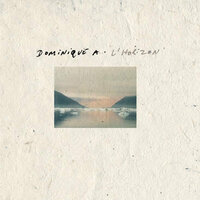
Song information On this page you can read the lyrics of the song L'Horizon , by -Dominique A
In the genre:Шансон
Release date:08.01.2012
Song language:French
Select which language to translate into:
Write what you think about the lyrics!
Other songs by the artist:
| Name | Year |
|---|---|
| 2013 | |
| 2001 | |
Le Jour De L'ouverture ft. Christophe Miossec, Dominique A | 2005 |
| 2013 | |
| 2019 | |
| 2015 | |
| 2009 | |
| 2024 | |
| 2012 | |
| 2004 | |
| 2010 | |
| 2012 | |
| 2012 | |
| 2012 | |
| 2009 | |
| 2012 | |
| 2012 | |
| 2012 | |
| 2012 | |
| 2012 |