| O Violeiro (Ao Vivo) (original) | O Violeiro (Ao Vivo) (translation) |
|---|---|
| Vô cantá no canturi primero | Grandpa sing in the first canturi |
| As coisa lá da minha mudernage | The things from my changernage |
| Qui mi fizero errante e violêro | I wanted to do wandering and violating |
| Eu falo séro i num é vadiage | I speak seriously i num is vadiage |
| I pra você qui agora está mi ôvino | I for you, now it's my ovine |
| Juro inté pelo santo minino | I swear by the holy minino |
| Vige maria qui ôve o qui eu digo | Vige maria qui ôve what I say |
| Si fô mintira mi manda um castigo | If you lie, send me a punishment |
| Apois pro cantadô i violero | Support for singing and violero |
| Só hai treis coisa nesse mundo vão | There are only three things in this world |
| Amô, furria, viola, nunca dinhêro | Amo, furria, viola, never money |
| Viola, furria, amô, dinhêro não | Viola, furria, amo, no money |
| Cantadô di trovas i martelo | Cantadô di trovas i hammer |
| Di gabinete, ligêra i moirão | Di office, light and fence post |
| Ai cantadô já curri o mundo intêro | Ai cantadô, I've toured the entire world |
| Já inté cantei nas prtas di um castelo | I even sang on the front of a castle |
| Dum rei qui si chamava di juão | From a king who he called di juão |
| Pode acriditá meu companhêro | You can believe my companion |
| Dispois di tê cantado u dia intêro | After having sung an entire day |
| O rei mi disse fica, eu disse não | King Mi said stay, I said no |
| Si eu tivesse di vivê obrigado | If I had di live, thank you |
| Um dia inantes dêsse dia eu morro | One day before that day I die |
| Deus feis os homi e os bicho tudo fôrro | God made the homi and the animals all fur |
| Já vi iscrito no livro sagrado | I've seen it written in the holy book |
| Qui a vida nessa terra é u’a passage | Who life on this earth is u'a passage |
| I cada um leva um fardo pesado | I each one carries a heavy burden |
| É um insinamento qui derna a mudernage | It's an instruction qui derna a changernage |
| Eu trago bem dent' do coração guardado | I bring well dent' of the guarded heart |
| Tive muita dô di num tê nada | I had a lot of pain, I had nothing |
| Pensano qui êsse mundo é tud’tê | I think that this world is everything |
| Mais só dispois di pená pelas istrada | But only after dis pená by the roads |
| Beleza na pobreza é qui vim vê | Beauty in poverty is what I came to see |
| Vim vê na procissão u lôvado-seja | I came to see u lovado-be in the procession |
| I o malassombro das casa abandonada | I the malaise of abandoned houses |
| Côro di cego nas porta das igreja | Côro di cego at church doors |
| I o êrmo da solidão das istrada | I the desert of the loneliness of the isstrada |
| Pispiano tudo du cumêço | Pispiano everything du cumêço |
| Eu vô mostrá como faiz o pachola | I'll show you how to do the pachola |
| Qui inforca u pescoço da viola | Who informs the neck of the viola |
| Rivira toda moda pelo avêsso | Turn all fashion upside down |
| I sem arrepará si é noite ou dia | I will not worry if it's night or day |
| Vai longe cantá o bem da furria | Go far, sing the good of fury |
| Sem um tustão na cuia u cantadô | Without a tustão in the cuia u cantadô |
| Canta inté morrê o bem do amô | Sing inté morrê the good of love |
Translation of the song lyrics O Violeiro (Ao Vivo) - Elomar, Geraldo Azevedo, Vital Farias
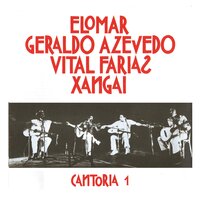
Song information On this page you can read the lyrics of the song O Violeiro (Ao Vivo) , by -Elomar
In the genre:Музыка мира
Release date:01.10.2020
Song language:Portuguese
Select which language to translate into:
Song tags:
#O Violeiro
Write what you think about the lyrics!
Other songs by the artist:
| Name | Year |
|---|---|
| 1998 | |
| 1998 | |
| 2019 | |
| 1998 | |
Chorando E Cantando ft. Geraldo Azevedo | 1997 |
| 1985 | |
| 1998 | |
| 1983 | |
| 1983 | |
| 1983 | |
| 1996 | |
| 2011 | |
Cantiga do Boi Encantado (Ao Vivo) ft. Geraldo Azevedo, Vital Farias, Xangai | 2020 |
Sete cantigas para voar (Ao Vivo) ft. Geraldo Azevedo, Vital Farias, Xangai | 2020 |
Novena (Ao Vivo) ft. Geraldo Azevedo, Vital Farias, Xangai | 2020 |
Desafio do Auto da Catingueira (Ao Vivo) ft. Geraldo Azevedo, Vital Farias, Xangai | 2020 |
Aí D'eu Saudade (Ao Vivo) ft. Geraldo Azevedo, Vital Farias, Xangai | 2020 |
Ai que Saudade de Ocê (Ao Vivo) ft. Geraldo Azevedo, Vital Farias, Xangai | 2020 |
Cantiga do Estradar (Ao Vivo) ft. Geraldo Azevedo, Vital Farias, Xangai | 2020 |
O Menino e Os Carneiros ft. Xangai | 2013 |