| Apurate, José (original) | Apurate, José (translation) |
|---|---|
| Así hablaba la Jacinta | Thus spoke Jacinta |
| En mi pueblo, yo la oí | In my town, I heard it |
| Cuando las aguas llegaron | When the waters came |
| Y se tuvieron que ir | and they had to go |
| Mezclando buen castellano | Mixing good Spanish |
| Con algo de guaraní | with some guaraní |
| Esto fue lo que ella dijo | This was what she said |
| Yo lo voy a repetir | I'm going to repeat it |
| Apurate José que ya está viniendo | Hurry José, he's already coming |
| La creciente otra vez y no sé por qué | The rising again and I don't know why |
| Esta vuelta las aguas me dan miedo | This turn the waters scare me |
| Todo el bicherío la está anunciando | All the bugs are announcing it |
| Como nunca fue ¿hayé José? | As it never was, is there José? |
| Ya junté los críos y el atadito en el terraplén | I already gathered the kids and the little bundle on the embankment |
| Doña Pancha vino al amanecer | Doña Pancha came at dawn |
| Y se fue con Frete para el batel | And she left with Frete for the batel |
| Se llevó unas calchas y algunos trastos | She took some calchas and some junk |
| En el carro cué | In the cué car |
| Ya pasó la Eulogia y Cambá Maciel | Eulogia and Cambá Maciel are over |
| Orillando el pueblo por el tapé | Bordering the town through the tapé |
| Apurá te digo que llega el río y no sé por qué | Hurry I tell you that the river is coming and I don't know why |
| El silencio aturde asustandomé | The silence stuns scaring me |
| Nunca fue tan triste el atardecer | The sunset was never so sad |
| La virgencita que me perdone | The little virgin who forgives me |
| Pero hace mucho que Dios se olvida | But God has long since forgotten |
| De los isleños jheí chupe | Of the jhei islanders suck |
| ¡ay, como sufre la gente pobre! | Oh, how poor people suffer! |
| Calamidades manté le suelen pasar | Calamities I kept happen to him |
| Al pueblo, ¿hayé José? | To the people, is there José? |
| Te acordas la otra vez, los que no pudieron | Do you remember the other time, those who could not |
| Alcanzar el camino, nadie más los vio | Reaching for the road, no one else saw them |
| La evarista Luján, la de los Ríos | The evarista Luján, the one of the Rivers |
| Se qudó solita esperando al López | She stayed alone waiting for López |
| En el rancho allá y no se supo más | At the ranch there and nothing more was heard |
| Cada Viernes Santo suelo rezarle | Every Good Friday I usually pray to him |
| Al Rosario angá | To Rosario Anga |
| Apurá te digo!, fijate bien | Hurry up I tell you!, look closely |
| El Jacinto Gómez pasó también | Jacinto Gómez also passed |
| Fue de lo del Chino para buscarle | He went from Chino to look for him |
| A la güaina de él | To the güaina of him |
| Ya junté el atado y los cunumí | I already put together the bundle and cunumí them |
| Y a mi virgencita, la de Itatí | And to my little virgin, the one from Itatí |
| Le pedí conrezos que nos ayude | I asked him with prayers to help us |
| Para salir hay que ir costeando | To go out you have to go coasting |
| El camino así | the way like this |
| Apurá te digo! | Hurry I tell you! |
| Añá membí! | Add membi! |
Translation of the song lyrics Apurate, José - Teresa Parodi
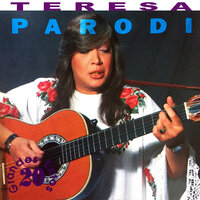
Song information On this page you can read the lyrics of the song Apurate, José , by -Teresa Parodi
In the genre:Латиноамериканская музыка
Release date:31.12.1992
Song language:Spanish
Select which language to translate into:
Write what you think about the lyrics!
Other songs by the artist:
| Name | Year |
|---|---|
| 1986 | |
| 1992 | |
| 1992 | |
| 1996 | |
| 1992 | |
| 1985 | |
| 1992 | |
| 2020 | |
Credo ft. Teresa Parodi, Luis Enrique Mejia Godoy | 2021 |
| 1986 | |
| 1986 | |
| 1992 |