| Un Cura de Aldea (original) | Un Cura de Aldea (translation) |
|---|---|
| Tien una vieya sotana | He has an old cassock |
| Y un bonete muy gastau | And a very worn bonnet |
| Tien un rosariu con cuentes | Have a rosariu with beads |
| De madera y un breviariu | Wooden and a breviariu |
| Que lu reza todos los dies | that lureza every day |
| Cuando el sol ya ta baxando | When the sun is already going down |
| En atapecer de oru | in atapecer de oru |
| O en atapecer de orbayu | Or in orbayu atapecer |
| Per la laborá diz la misa | Per la laborá says the mass |
| Cuando atapez el rosaiu | When you hit the rosaiu |
| Per la nochi xuega al tute | Per the night he plays tute |
| Y en la cama reza al santu | And in bed pray to the saint |
| Y asomau al corredor | And I peeked into the corridor |
| Ponse el probe atristayau | Put on the probe atristayau |
| Cavila si el so vivir | Ponder if he so live |
| Non tará ya fracasau | It will not fail anymore |
| La iglesia fecha de piedra | stone date church |
| Ta del pueblu en lo más alto | Ta of the town at the top |
| Y ye un gozu les campanes | And ye a gozu les bells |
| Repicar nel campanariu | Ringing in the bell tower |
| Y cerquina de la iglesia | And close to the church |
| Tien so casina el bon parracu | Tien so casina el bon parracu |
| Enllená de los afanes | Filled with care |
| Que el vivir va filvanado | That living is filmed |
| Per les mañanes la misa | For the mornings the mass |
| Cunado atapez el rosariu | When the rosariu attacked |
| Como una esfueya bendita | Like a blessed fire |
| Fecha de rezos y cantos | Date of prayers and songs |
| Y en el camín de vuelta el chigre | And on the way back the windlass |
| Ya conoz el su fracasu | You already know his failure |
| Si de nochi vuelve a casa | If he comes home at night |
| Despacin pasin a pasu | Slowly, passion by step |
Translation of the song lyrics Un Cura de Aldea - Victor Manuel
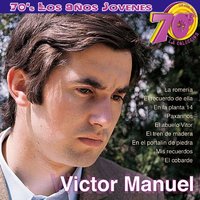
Song information On this page you can read the lyrics of the song Un Cura de Aldea , by -Victor Manuel
In the genre:Поп
Release date:31.01.2013
Song language:Spanish
Select which language to translate into:
Write what you think about the lyrics!
Other songs by the artist:
| Name | Year |
|---|---|
| 1999 | |
| 2008 | |
| 1970 | |
| 2009 | |
| 1999 | |
| 1999 | |
| 1999 | |
| 1974 | |
| 1970 | |
| 2015 | |
| 2013 | |
| 1974 | |
| 1971 | |
| 1971 | |
| 1971 | |
| 2013 | |
| 2013 | |
| 2013 | |
| 2013 | |
| 2003 |