| Il Magnifico (original) | Il Magnifico (translation) |
|---|---|
| Potentia, sapientia, carmen | Power, wisdom, song |
| Quam pulchra iuventa | What a beautiful youth |
| qui tamen fugit! | who still flees? |
| Qui vult laetus esse, sit: | He wants to be happy |
| De postero die non veritas. | The next day I will not get the truth. |
| Nobilis princeps, | The famous prince |
| Ipse qui spectat ultra umbras | He looks beyond the shadows |
| Luctuosi mundi | The sad world |
| Vacat servitute | Slavery is free |
| Personarum | Persons |
| Nobilis princeps, | The famous prince |
| Tua adamata urbs | Your favorite city |
| Amavisti | You loved |
| Artis atque carminis | Art and music |
| Sapientiae atque scientiae | Wisdom and Knowledge |
| Moenia complevisti | You filled the walls |
| Nunc oculi caeci errant | Now the eyes of the blind go astray |
| Aine videre. | Aine to see. |
| Homines pauperes | Poor people |
| Errant inter divitias quae non concipiunt. | They wander among riches which they do not conceive. |
| Possidissent tangere cum digito | Possession to touch with your finger |
| Naturam Caeli | The nature of heaven |
| Sed id non agiunt | But they don't do it |
| Pro monumento tuae animae, tibi qui amavisti vitam et donavisti mentibus vitam, | As a reminder to your soul, that you loved life and you gave life to minds |
| Refero carmina: | Redirect the poems: |
| «Quant'e bella giovinezza | « Quant'e bella giovinezza |
| che si fugge tuttavia! | che si tuttavia! |
| Chi vuol essere lieto, sia: | Chi vuol be lieto, sia: |
| di doman non c’e certezza.» | dimodoman not c'e eventszza.' |
Translation of the song lyrics Il Magnifico - Inner Shrine
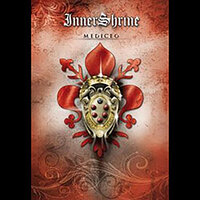
Song information On this page you can read the lyrics of the song Il Magnifico , by -Inner Shrine
Song from the album: Mediceo
In the genre:Альтернатива
Release date:25.09.2019
Song language:Latin
Record label:Lands of Glory
Age restrictions: 18+
Select which language to translate into:
Write what you think about the lyrics!
Other songs by the artist:
| Name | Year |
|---|---|
| 2019 | |
| 2000 | |
| 2000 | |
| 2000 | |
| 2019 | |
| 2019 | |
| 2000 | |
| 2019 | |
| 2000 | |
| 2000 | |
| 2019 |