| La traviata, Act I (original) | La traviata, Act I (translation) |
|---|---|
| Dell’invito trascorsa è già l’ora | It is already time for the invitation to pass |
| Voi tardaste | You were late |
| Giocammo da Flora. | We played at Flora's. |
| E giocando quell’ore volar. | And playing those hours fly. |
| Flora, amici, la notte che resta | Flora, friends, the night that remains |
| D’altre gioie qui fate brillar | Let others shine here |
| Fra le tazze è più viva la festa | The party is more lively among the cups |
| E goder voi potrete? | And can you enjoy it? |
| Lo voglio; | I want; |
| Al piacere m’affido, ed io soglio | I entrust myself to pleasure, and I am a throne |
| Col tal farmaco i mali sopir. | With such a drug, the ills will disappear. |
| Sì, la vita s’addoppia al gioir. | Yes, life doubles to joy. |
| In Alfredo Germont, o signora, | In Alfredo Germont, o lady, |
| Ecco un altro che molto vi onora; | Here is another that honors you a lot; |
| Pochi amici a lui simili sono. | Few friends like him are. |
| Dà la mano ad Alfredo, che gliela bacia | She gives her hand to Alfredo, who kisses it |
| Mio Visconte, merce' di tal dono. | My Viscount, merchandise of this gift. |
| Caro Alfredo | Dear Alfredo |
| Marchese | Marquis |
| T’ho detto: | I told you: |
| L’amistà qui s’intreccia al diletto. | Here love is intertwined with delight. |
| Pronto è il tutto? | Is everything ready? |
| Un servo accenna di sì | A servant nods yes |
| Miei cari sedete: | Dear ones sit down: |
| È al convito che s’apre ogni cor. | It is at the banquet that every heart opens. |
| Ben diceste le cure segrete | Well said the secret cures |
| Fuga sempre l’amico licor. | The friend licor always runs away. |
| Sempre Alfredo a voi pensa. | Alfredo always thinks of you. |
| Scherzate? | Are you kidding? |
| Egra foste, e ogni dì con affanno | Egrave you were, and every day with breathlessness |
| Qui volò, di voi chiese. | Here flew, of you asked. |
| Cessate. | Cease. |
| Nulla son io per lui. | I am nothing for him. |
| Non v’inganno. | There is no deception. |
| Vero è dunque? | Is it true then? |
| onde è ciò? | where is this? |
| Nol comprendo. | I understand Nol. |
| Si, egli è ver. | Yes, he is true. |
| Le mie grazie vi rendo. | My thanks I give you. |
| Voi Barone, feste altrettanto | You Baron, parties as well |
| Vi conosco da un anno soltanto. | I've only known you for a year. |
| Ed ei solo da qualche minuto. | And he's only been for a few minutes. |
| Meglio fora se aveste taciuto. | Better drill if you had been silent. |
| Mi è increscioso quel giovin | I am disappointed that young man |
| Perché? | Because? |
| A me invece simpatico egli è. | On the other hand, I like him. |
| E tu dunque non apri più bocca? | So you don't open your mouth any more? |
| È a madama che scuoterlo tocca | It is madame that shaking him touches |
| Sarò l’Ebe che versa. | I will be the Hebe who pours. |
| E ch’io bramo | And that I crave |
| immortal come quella. | immortal like that. |
| Beviamo. | We drink. |
| O barone, né un verso, né un viva | O baron, neither a verse, nor a living |
| Troverete in quest’ora giuliva? | Will you find it in this joyful hour? |
| Il Barone accenna di no | The Baron mentions no |
| Dunque a te | So to you |
| ad Alfredo | to Alfredo |
| Sì, sì, un brindisi. | Yes, yes, a toast. |
| L’estro | The inspiration |
| Non m’arride | He does not laugh at me |
| E non se' tu maestro? | And are you not a teacher? |
| Vi fia grato? | Will you be grateful? |
| Sì. | Yup. |
| Sì? | Yup? |
| L’ho già in cor. | I already have it in my heart. |
| Dunque attenti | So be careful |
| Sì, attenti al cantor. | Yes, beware of the cantor. |
Translation of the song lyrics La traviata, Act I - Maria Callas, Franco Ricciardi, Silvio Maionica
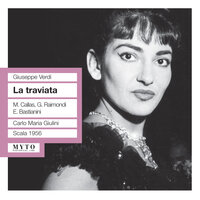
Song information On this page you can read the lyrics of the song La traviata, Act I , by -Maria Callas
Song from the album: Verdi: La traviata
In the genre:Мировая классика
Release date:28.02.2015
Song language:Italian
Record label:MYTO Historical
Select which language to translate into:
Write what you think about the lyrics!
Other songs by the artist:
| Name | Year |
|---|---|
| 2019 | |
| 2014 | |
| 2005 | |
| 2016 | |
| 2012 | |
| 2014 | |
| 2012 | |
| 2014 | |
| 2019 | |
| 2019 | |
| 2012 | |
Prumesse Mancate ft. Enzo D.O.N.G. | 2014 |
Gianni Schicchi, Act I: "O mio babbino caro" (Lauretta) ft. Tullio Serafin, Sinfonie-Orchester des RAI Rom, Maria Callas, Sinfonie-Orchester des RAI Rom, Tullio Serafin | 2013 |
| 2014 | |
| 2020 | |
| 2012 | |
| 2018 | |
| 2019 | |
| 2020 | |
| 2006 |