| Victory at Lawrence |
|---|
| No work, no work, and the future bleak and grey |
| Posters in our town appeared showing Lawrence USA |
| Woolen mills and bags of gold, a chance we could not ignore |
| From Europe we all sailed away — bound for New England’s shore |
| Come with me now to Lawrence in the year of nineteen twelve |
| These back to back damp tenements house many like ourselves |
| And early in the icy dawn hear the factory whistles blow |
| And me and my wif and our eldest girl — to the wooln mills must go |
| We can’t afford warm overcoats, so meagre is our pay |
| In the greatest woolen centre of — the mighty USA |
| We workers wrote to William Wood to tell of our distress |
| And the answer that he gave us was to pay us even less |
| «Short pay! |
| Short pay!» |
| the Polish women weavers all cried |
| As they left their looms and went downstairs, walked out side by side |
| When we opened up our envelopes and found they’d cut our wage |
| We Italians ran from room to room, you’d never seen such rage! |
| We stopped the motors, tore the cloth and cut the belts with knives |
| By the end of that day there were ten thousand out on strike |
| Next day the Poles, Italians too |
| Belgian weavers in their wooden shoes |
| Armenians, Turks, Gentiles and Jews |
| Met at the City Hall |
| And the speakers ranted, raged and roared |
| In languages I never heard before |
| ‘Til smiling Joe Ettor took the floor |
| And spoke in my native tongue |
| «I'm here to counsel and advise |
| To win a strike you must be organised |
| Four members each you will provide |
| From fourteen nationalities.» |
| When Ettor spoke, he seemed to glow |
| Like a beacon shining on a dark night, oh |
| How the workers loved you, smiling Joe! |
| But Father Riley was so irate |
| He told the Irish «Don't participate! |
| The poor must learn to endure their fate.» |
| The Governor sent the militia |
| Two thousand men were deployed |
| They beat our pregnant women |
| And they stabbed a young Syrian boy |
| «You khaki thugs on horseback |
| With your bayonets and your guns |
| You arrogant Harvard puppies |
| See what you have done!» |
| On Common Street they shot and killed |
| Poor Anna LoPizzo |
| They arrested our brave leaders |
| Giovannitti and smiling Joe |
| They laid the blame upon them |
| Though they were three miles away |
| A policeman pulled that trigger |
| My wife saw it, plain as day! |
| The anger that we mourners felt |
| I scarcely can relate |
| As we carried poor Anna’s coffin |
| To the cemetery gates |
| Where Father Riley blocked our way |
| With a frown on his pious face |
| And he says «You cannot bury her |
| In this holy place» |
| Well, Big Bill Haywood came in on a train |
| Our excitement we could not contain |
| When we heard his fog-horn voice proclaim: |
| «Fellow workers don’t forget |
| To the mill owners' great regret |
| You can’t weave cloth with a bayonet!» |
| And Gurley Flynn, the bosses' nightmare |
| With her Irish eyes and her coal black hair — |
| She says «This is class warfare!» |
| We stood together nine long weeks |
| And the bosses gave in |
| We assembled on the Common |
| Men, children and women |
| Where thirty thousand voted |
| To end this bloody feud |
| And we sang The Internationale |
| In every tongue we knew |
| Well, Joe Ettor and Giovannitti |
| They were tried for murder in the first degree |
| And the jury found them «Not guilty» |
| So Sammy Gompers and your A.F. of L., |
| You can take Johnny Golden and go to hell |
| Craft unionism has an ugly smell |
| No one knew, and no one cared |
| How the unskilled foreign worker fared |
| ‘Til the I.W.W. |
| double-dared! |
| Fellow workers, never forget |
| We are the ones that toil and sweat |
| And we have not spoken — yet! |
Lyrics Victory at Lawrence - Andy Irvine
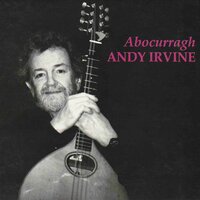
Song information On this page you can read the lyrics of the song Victory at Lawrence , by -Andy Irvine
In the genre:Музыка мира
Release date:31.12.2009
Song language:English
Select which language to translate into:
Write what you think about the lyrics!
Other songs by the artist:
| Name | Year |
|---|---|
| 2017 | |
| 2017 | |
| 2017 | |
| 2017 | |
| 2017 | |
| 2017 | |
| 2017 | |
Come To The Bower ft. Rens Van Der Zalm | 2013 |
Outlaw Frank Gardiner ft. Rens Van Der Zalm | 2013 |
He Fades Away ft. Rens Van Der Zalm | 2013 |
| 2009 | |
| 2009 | |
| 2019 | |
| 2006 | |
| 1995 | |
| 1995 | |
| 1995 | |
| 1999 | |
| 1999 | |
| 1999 |