| An Old Man's Winter Night |
|---|
| All out of doors looked darkly in at him |
| Through the thin frost, almost in separate stars, |
| That gathers on the pane in empty rooms. |
| What kept his eyes from giving back the gaze |
| Was the lamp tilted near them in his hand. |
| What kept him from remembering what it was |
| That brought him to that creaking room was age. |
| He stood with barrels round him—at a loss. |
| And having scared the cellar under him |
| In clomping there, he scared it once again |
| In clomping off;—and scared the outer night, |
| Which has its sounds, familiar, like the roar |
| Of trees and crack of branches, common things, |
| But nothing so like beating on a box. |
| A light he was to no one but himself |
| Where now he sat, concerned with he knew what, |
| A quiet light, and then not even that. |
| He consigned to the moon, such as she was, |
| So late-arising, to the broken moon |
| As better than the sun in any case |
| For such a charge, his snow upon the roof, |
| His icicles along the wall to keep; |
| And slept. |
| The log that shifted with a jolt |
| Once in the stove, disturbed him and he shifted, |
| And eased his heavy breathing, but still slept. |
| One aged man—one man—can't fill a house, |
| A farm, a countryside, or if he can, |
| It’s thus he does it of a winter night. |
Lyrics An Old Man's Winter Night - Robert Frost
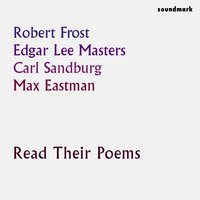
Song information On this page you can read the lyrics of the song An Old Man's Winter Night , by -Robert Frost
Release date:09.01.2014
Song language:English
Select which language to translate into:
Write what you think about the lyrics!
Other songs by the artist:
| Name | Year |
|---|---|
| 2011 | |
| 1957 | |
| 1957 |