| Joliet |
|---|
| Joliet, she says, is the darkest part of a man |
| It’s angry and slick |
| Into her letters writes |
| through herself each time |
| she thinks of him |
| Trips her way down south |
| into mystery’s mouth |
| and he follows her there |
| It’s what she doesn’t say |
| that makes you want to stay |
| and try to comfort her |
| I talked to the cousins of people who knew you |
| I asked them the questions they expected to hear |
| Like maybe a killing went down in your town |
| Maybe it’s the prison |
| or the birth of barbed wire |
| Joliet, she says, is the darkest part of a man |
| It’s shaped like liberty’s bell |
| cracked and common law |
| and stretched out over its flaws |
| like an ink-less well |
| The hanging judge in town |
| records her comments down |
| she saves the crowd the truth — |
| and deals with it herself |
| Fills that hollow well |
| with nothing left to prove |
| I talked to mountains and streams that pushed through there |
| I talked to the trees that had no fruit to bear |
| to the colorless people that sat there |
| beneath her |
| curled up, stared |
| I talked to the cousins of people who knew you |
| I asked them the questions they expected to hear |
| Like maybe a killing went down in your town |
| Maybe it’s the prison |
| or the birth of barbed wire |
| Joliet |
Lyrics Joliet - Seven Mary Three
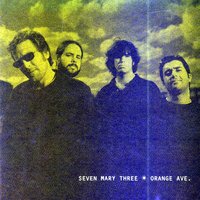
Song information On this page you can read the lyrics of the song Joliet , by -Seven Mary Three
Song from the album: Orange Ave.
In the genre:Иностранный рок
Release date:29.08.2005
Song language:English
Record label:Warner Strategic Marketing
Select which language to translate into:
Write what you think about the lyrics!
Other songs by the artist:
| Name | Year |
|---|---|
| 1995 | |
| 1995 | |
| 1995 | |
| 1995 | |
| 1995 | |
| 1995 | |
| 1997 | |
| 1995 | |
| 1995 | |
| 1995 | |
| 1995 | |
| 1995 | |
| 1997 | |
| 1997 | |
| 1997 | |
| 1997 | |
| 1997 | |
| 1997 | |
| 1997 | |
| 1997 |