| Pieces and Parts |
|---|
| They say that in 1842 on a plantation in Alabama |
| The slaves unearthed a huge skeleton |
| The bones of a giant whale |
| A leviathan |
| From the time when all the world was covered with water |
| From the Andes to the Himalayas |
| And even Alabama was deep down under |
| And the slaves looked at the huge bones and they said: |
| These must be the bones of a fallen angel |
| These must be the bones of a fallen angel |
| Out on the ocean, out of the water |
| We look for signs of him |
| He looks like a giant snow hill, a fountain |
| Then he disappears. |
| He’s a speck on the horizon |
| We see him only in parts |
| The flash of a tail, his beating heart |
| He’s in pieces and parts |
| It’s easier for a camel to slide through the eye of a needle |
| Than to find a whale who hides at the bottom of the ocean |
| It’s easier to sail around the world in a coffee cup |
| Than to see a whale when he comes rising up |
| We see him only in parts |
| A fountain, fins, a speck on the horizon |
| Giant teeth, an open mouth |
| Look out, look out, look out, look out |
| So hit an elephant with a dart |
| And he just reaches around and pulls it out with his trunk |
| But hit a whale in the hear and the whole ocean turns red |
| It turns red |
| We see him only in parts |
| The flash of a tail, his beating heart |
| He’s in pieces and parts |
| So get hit in your head |
| And there may be a few things you can’t recall at all |
| But you get hit in your heart |
| And you’re in pieces and parts |
| Pieces and parts |
Lyrics Pieces and Parts - Laurie Anderson
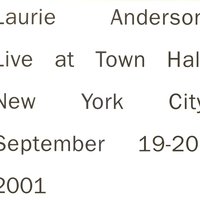
Song information On this page you can read the lyrics of the song Pieces and Parts , by -Laurie Anderson
Song from the album: Live in New York
Release date:27.04.2009
Song language:English
Record label:Nonesuch
Select which language to translate into:
Write what you think about the lyrics!
Other songs by the artist:
| Name | Year |
|---|---|
| 2005 | |
| 2008 | |
| 2005 | |
| 2010 | |
| 2005 | |
| 2005 | |
| 2008 | |
| 2008 | |
| 2005 | |
| 2008 | |
| 2005 | |
| 2007 | |
| 2010 | |
| 2007 | |
| 2008 | |
| 2008 | |
| 2008 | |
| 2001 | |
| 2008 | |
| 2001 |