| I Fichi (original) | I Fichi (translation) |
|---|---|
| L’ouverture mi è riuscita un… un 60%, che non è una brutta percentuale, percè. | I managed the overture by ... a 60%, which is not a bad percentage, because. |
| .no, eeh, no no… | .no, eeh, no no ... |
| E' che io a questo punto avrei dovuto fare un do, ma il do non è una nota | It's just that I should have done a C at this point, but the C is not a note |
| facile, il do è una nota… | easy, the do is a note ... |
| Beethoven che era Beethoven il do ci prendeva un 80% delle volte, | Beethoven who was Beethoven the do took us 80% of the time, |
| anzi ha scritto una decima sinfonia senza do perchè mi fa rabbia, | indeed he wrote a tenth symphony without do because it makes me angry, |
| ma la società «Gli amici delle sette note» non gli ha mai permesso di | but the company «The friends of the seven notes» never allowed him to |
| pubblicare. | to publish. |
| E il tempo di questa canzone è un tempo… il tempo è un tempo: | And the tempo of this song is a time ... time is a time: |
| carina questa! | this cute! |
| Il tempo è un tempo, ma, il tempo un tempo era… | Time is a time, but time was once ... |
| Ah, un momento: bisogna spiegare a quelli di sotto che il microfono che | Ah, wait: you have to explain to those below that the microphone that |
| dovrebbe essere qui è qui e il microfono che dovrebbe essere qui è qui. | it should be here is here and the mic that should be here is here. |
| Il fatto che qui e qui in italiano si dica nello stesso modo | The fact that here and here in Italian is said in the same way |
| Complica orrendamente le cose però… Va beh, insomma, il tempo un tempo era… | It complicates things horribly though ... Okay, in short, once upon a time was ... |
| un valzer moderato, ma col passare del tempo, e te dai… ha acquistato una | a moderate waltz, but over time, and you come on ... bought one |
| precisa coscienza politica ed è diventato un valzer decisamente di sinistra. | clear political consciousness and has become a decidedly left waltz. |
| Ah ah aah! | Ha ha aah! |
| Virtuosismi? | Virtuosity? |
| Ma vorrei l’applauso.. Temo che questa chitarra sia | But I would like the applause .. I'm afraid this guitar is |
| orrendamente scordata, ma il pezzo è giusto con la chitarra orrendamente | horrendously out of tune, but the piece is right with the horrendously guitar |
| scordata. | forgotten. |
| La canzone potrebbe ricordare a qualcun…, la canzone si chiama «I fichi», potrebbe ricordare a qualcuno «I crauti». | The song might remind someone…, the song is called «The figs», it could remind someone of «The sauerkraut». |
| «I crauti» è una canzone | "Sauerkraut" is a song |
| scritta tanti anni fa, una canzone… si fa per dire, che faceva… | written many years ago, a song ... so to speak, what did it do ... |
| Io non capisco la gente… | I don't understand people ... |
| Eh, te fai sì sì con la testa: la conosci? | Eh, you do yes yes with your head: do you know her? |
| E' la tua canzone preferita! | It's your favorite song! |
| Te a un certo punto vai col tuo moroso e dici «Senti suonano i crauti, | At a certain point you go with your boyfriend and say "Listen to the sauerkraut playing, |
| è la nostra canzone!»… No, un momento c'è della gente cosi' eh! | it's our song! »… No, one moment there are people like that eh! |
| Io… | The… |
| Io non capisco la gente… | I don't understand people ... |
| Questo è un valzer con una precisa coscienza politica. | This is a waltz with a definite political conscience. |
| Non è, c'è, c'è, è… | It is not, there is, there is, it is ... |
| ma è… lei mi dica ha una… | but it's ... you tell me you have a ... |
| Che non ci piacciono i crauti… | That we don't like sauerkraut ... |
| Ecco la mia canzone è molto diversa. | Here is my song is very different. |
| Fa: | Does: |
| Io non capisco la gente | I don't understand people |
| Eh lo so, va beh, d’altra parte | Oh I know, okay, on the other hand |
| Che non ci piacciono i fichi: | We don't like figs: |
| Già diversa!! | Already different !! |
| Già diversa! | Already different! |
| L' han detto persino gli antichi | Even the ancients said so |
| Sì ai fichi ed abbasso i bigné | Yes to figs and down with cupcakes |
| Virtuosismo. | Virtuosity. |
| C'è questo sol che è… è un mi bemolle, comunque… Lo abbassiamo? | There's this G that's ... it's an E flat, anyway ... Shall we turn it down? |
| Lei cosa dice? | What do you say? |
| Lo abbassiamo? | Shall we lower it? |
| Ma siiii… Ma siii… Seconda strofa nella | But be ... But be ... Second verse in the |
| quale si va a spiegare l’ontologia del fico, ovvero la vera, reale essenza del | which one goes to explain the ontology of the fig tree, that is the true, real essence of |
| fico. | FIG. |
| Che non e' da tutti, insomma, cioè… Notate che quando faccio il | Which is not for everyone, in short, that is ... Notice that when I do the |
| virtuosismo mi abbasso con la spalla sinistra perchè mi viene ehm più facile… | virtuosity I go down with my left shoulder because it gets me er easier ... |
| Peccato che nel disco non lo vedranno che mi abbasso con la spalla sinistra, | Too bad they won't see it in the record that I bend down with my left shoulder, |
| ma… Eh? | but ... Eh? |
| Cosa viene adesso?! | What comes now ?! |
| I fichi son quella cosa | Figs are that thing |
| Pregevoli assieme al prosciutto | Valuable together with ham |
| Mangiabili in parte o del tutto | Eaten in part or in whole |
| Da soli o sia pure in alcun. | Alone or even in any. |
| A fewbody, mi dicono gli anglosassoni. | A fewbody, the Anglo-Saxons tell me. |
| Mangiabili in piedi o a Verona | Eaten standing up or in Verona |
| A letto, al mattino, in stazione | In bed, in the morning, at the station |
| Dovunque dà gioia… il melone | Wherever it gives joy… the melon |
| Ma questa è un' altra canzon… | But this is another song ... |
| Mangiabili in verno o d' estate | Eaten in winter or summer |
| E fino l’autunno inoltrato | And until late autumn |
| Ma allora c’ha il nome cambiato | But then the name changed |
| E si chiamano marron-glaceés… | And they are called marron-glaceés ... |
| Quando uno è bravo… | When one is good ... |
| Ma quando è maturo e sugoso | But when he's ripe and juicy |
| Allora è il momento del fico | Then it's time for the fig tree |
| Ch'è buono sì che non vi dico… | That it is good that I do not tell you ... |
| Oh rabbia, che ormai l’ho già dett! | Oh anger, I've already dictated it by now! |
| La canzone, vi sarete resi conto che è di grande serietà e di grande impegno. | The song, you will have realized that it is of great seriousness and great commitment. |
| È una canzone scientifico-morale e in questa strofa io vado a spiegare le | It is a scientific-moral song and in this verse I am going to explain the |
| prove scientifiche della beneficità del fico per gli esseri umani. | scientific evidence of the benefit of the fig tree for humans. |
| Vai! | Go! |
| Ehm, l’ho detto prima di Beethoven che non… Se qualcuno mi tenesse un dito | Um, I said it before Beethoven that I don't ... If someone held my finger |
| qua! | here! |
| Il fico fa bene alla vista… | The fig is good for the eyes ... |
| Stupiti! | Amazed! |
| Vi vedo stupiti. | I see you amazed. |
| Gli uccelli ne mangian quintali | The birds ate tons of it |
| E… quasi nessuno ha gli occhiali | And… hardly anyone has glasses |
| Ma questo è un segreto di poc | But this is a poc secret |
| Ma questo è soltanto uno scherzo | But this is only a joke |
| Di quello che giova in salute: | Of what benefits in health: |
| Su in Svezia che han larghe vedute… | Up in Sweden who have broad views ... |
| Anche sui 30, 40 centimetri | Even about 30 to 40 centimeters |
| I fichi la mutua li dà… | The figs are given by the mutual society ... |
| Eh?! | Eh ?! |
| Un applauso ma per cortesia! | A round of applause but please! |
| Se ce ne fosse bisogno, successive prove | If needed, further tests |
| della beneficità del fico in natura… | of the benefit of the fig tree in nature ... |
| Te prova ad andar sotto a un camions | Try to go under a truck |
| Oppure va sotto a un tranvai | Or it goes under a tram |
| Poi va sotto a un fico e vedrai | Then go under a fig tree and you'll see |
| Di quanto starai tu più ben… | Than you will be better off ... |
| Controindicazioni… | Contraindications ... |
| Ma attenti a non far come quello | But be careful not to be like that |
| Che in preda a pensieri lubrichi | Who in the throes of lewd thoughts |
| Andò sotto a un camions di fichi: | He went under a truck of figs: |
| Non puro può far molto mal… | Not pure can hurt a lot ... |
| Con… con grande vostro e mio dolore, soprattutto vostro, ma anche mio, | With ... with great pain yours and mine, especially yours, but also mine, |
| siamo giunti al finale che vi spiegherà la parte direi… ehm… | we have reached the ending that will explain the part I would say ... er ... |
| la parte direi della canzone | I'd say the part of the song |
| Ma ormai sono giunto alla fine | But now I have come to an end |
| E vi ho visto d’accordo e contenti: | And I saw you agree and happy: |
| Fra un fico e un cazzotto nei denti | Between a fig and a punch in the teeth |
| Ognuno ormai sceglier saprà… | Everyone will choose by now ... |
| Non è tanto per me, quanto per i fichi! | It's not so much for me as it is for the figs! |
Translation of the song lyrics I Fichi - Francesco Guccini
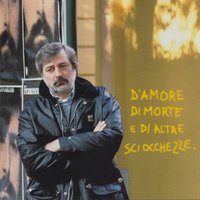
Song information On this page you can read the lyrics of the song I Fichi , by -Francesco Guccini
Song from the album: D'Amore Di Morte E Di Altre Sciocchezze
In the genre:Поп
Release date:02.03.2003
Song language:Italian
Record label:EMI Music Italy
Select which language to translate into:
Write what you think about the lyrics!
Other songs by the artist:
| Name | Year |
|---|---|
| 2015 | |
| 2006 | |
| 2003 | |
| 2003 | |
| 2006 | |
| 2011 | |
| 2015 | |
| 2015 | |
| 2006 | |
| 2011 | |
| 2006 | |
| 2011 | |
| 2015 | |
| 2011 | |
| 2011 | |
| 2006 | |
| 2011 | |
| 2011 | |
| 2011 | |
| 2015 |
New texts and translations on the site:
| Name | Year |
|---|---|
| 1998 | |
| 1998 | |
| 1998 | |
| 1998 | |
| 1998 | |
| 1998 | |
| 1998 | |
| 1998 | |
| 1997 |