| PCH 82 |
|---|
| No one can ever tell you what to do |
| Beware their words |
| So many quick to point the finger |
| Without pointing their way first |
| There’s so much we take for granted |
| Take control, and speak your voice |
| Don’t let them get the upper hand |
| Before you have no choice |
| In some countries even today police officers may search a person’s home or |
| office for evidence of wrongdoing and arrest him whenever they see fit. |
| In the United States on the other hand the Fourth Amendment protects the |
| individual and his property from unreasonable search and seizure by officers of |
| the law. |
| Double Jeopardy, the Fifth Amendment also guarantees the individual that he |
| will not be tried before a federal court more than once for the same crime. |
| A knock at the door whether by day or night, as a prelude to a search without |
| authority of law but solely on the authority of police, is inconsistent with |
| the conception of human rights, enshrined in the history of basic |
| constitutional documents of English speaking peoples. |
| Although the sanctity of ones privacy against illegal intrusion is one of the |
| most important basic rights in our Constitution, experiences show that such |
| intrusions occur at the hands of overzealous police officers. |
| Freedom of speech and freedom of press; |
| the right to speak his mind is close to |
| the heart of every American, the constitution prohibits most forms of |
| censorship over the press and speechmakers. |
| The argument against censorship is |
| clear: no government official should be permitted to dictate what ideas or |
| beliefs we are entitled to hear or believe. |
| Both good and evil should be |
| averted by more speech and not enforced silence. |
| Similarly while a person is free to make speeches on public streets he may be |
| prevented from doing so when he uses a loud or raucous amplifier, |
| which disturbs the public tranquility. |
Lyrics PCH 82 - Authority Zero
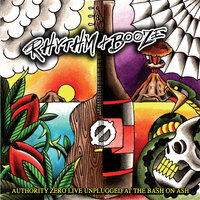
Song information On this page you can read the lyrics of the song PCH 82 , by -Authority Zero
Song from the album: Rhythm And Booze
In the genre:Панк
Release date:26.06.2006
Song language:English
Record label:Suburban Noize
Age restrictions: 18+
Select which language to translate into:
Write what you think about the lyrics!
Other songs by the artist:
| Name | Year |
|---|---|
| 2017 | |
| 2004 | |
| 2017 | |
| 2021 | |
| 2018 | |
| 2018 | |
| 2018 | |
| 2004 | |
| 2017 | |
| 2017 | |
| 2017 | |
| 2018 | |
| 2021 | |
| 2026 | |
| 2004 | |
| 2018 | |
| 2002 | |
| 2002 | |
| 2002 | |
| 2017 |